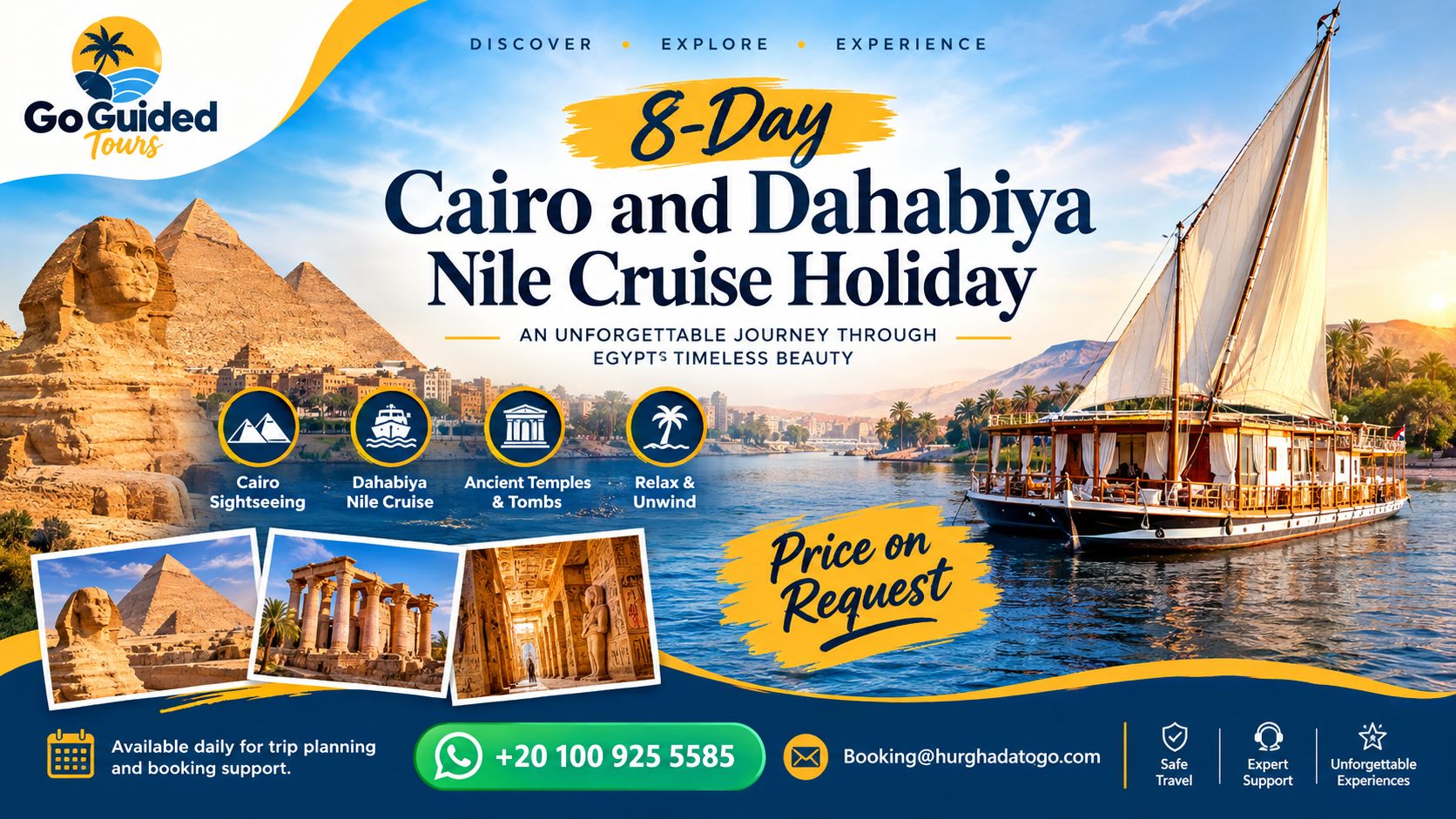
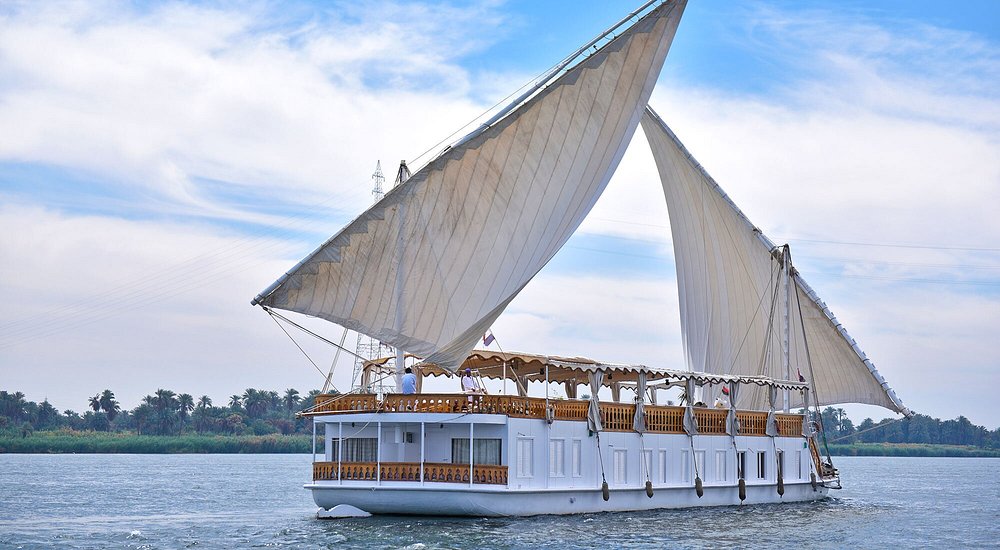
The 8-day Cairo and Dahabiya Nile cruise holiday is a private Egypt holiday that links the Pyramids of Giza and the Grand Egyptian Museum with a slow Dahabiya Nile cruise from Luxor to Aswan. A Dahabiya is a traditional sailing houseboat with only a few cabins, so you glide past temples, palm groves and farming villages in a quiet, private setting instead of sharing a large cruise ship with hundreds of passengers.
Your route runs Cairo → Giza → Luxor → Esna → Edfu → Kom Ombo → Aswan. A private Egyptologist guide explains every site, private vehicles handle all transfers, and the programme can be adjusted before booking to match your dates, pace and budget.
Tour Overview
This 8-day Egypt tour covers the three great chapters of Egyptian history in one journey: the Old Kingdom pyramids at Giza, the New Kingdom capital at Luxor, and the Ptolemaic temples of the Upper Nile. The Dahabiya cruise in the middle of the programme gives you the Nile as ancient Egyptians and 19th-century travellers experienced it, at a gentle pace.
| Duration | 8 days / 7 nights (3 nights on board the Dahabiya) |
| Start and end | Cairo arrival, Aswan departure |
| Route | Cairo → Giza → Luxor → Esna → Edfu → Kom Ombo → Aswan |
| Tour type | Private and tailor-made, no fixed group schedule |
| Cruise | Private Dahabiya, Luxor to Aswan, full board |
| Guide | Private English-speaking Egyptologist (other languages on request) |
| Price | Price on Request, confirmed in a written quotation |
Tour Highlights
Day-by-Day Itinerary: 8-Day Cairo and Dahabiya Nile Cruise Holiday
Below is the recommended plan. On a Dahabiya, sailing times depend on wind and Nile conditions, so the captain and your guide confirm the exact daily timing on board.
Day 1: Cairo Arrival and Welcome
Your representative meets you at Cairo International Airport and drives you privately to your hotel. Cairo is one of the oldest continuously inhabited capitals in the world, and the rest of the day is yours to rest.
- Private airport meet and assist
- Hotel check-in and trip briefing with your guide
- Optional evening stroll or Nile-side dinner (own expense)
Day 2: Giza Pyramids, Sphinx and Grand Egyptian Museum
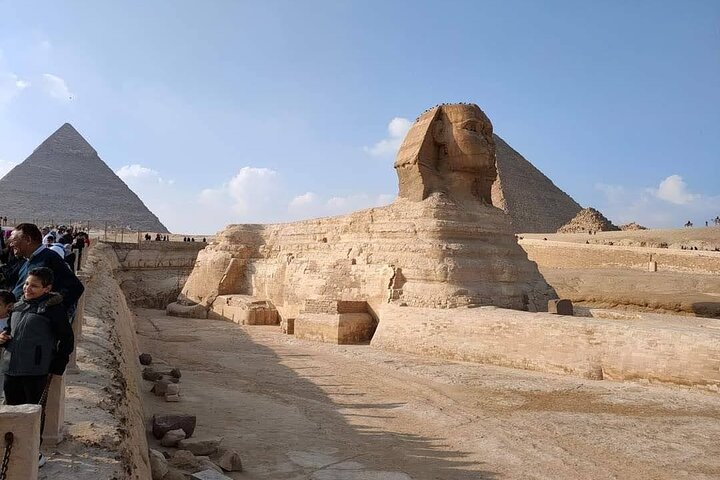
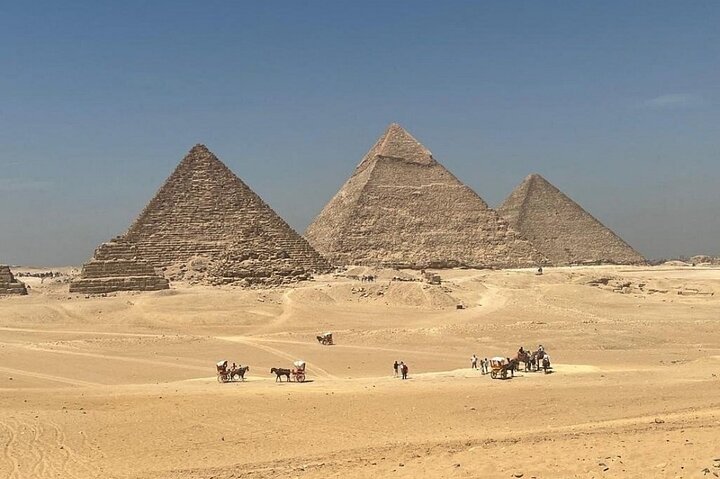
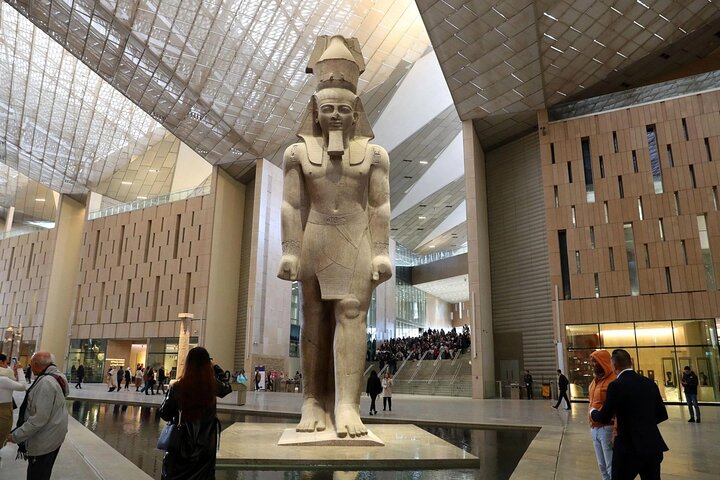
Spend the morning on the Giza Plateau visiting the Great Pyramid of Khufu, the Pyramid of Khafre and the Great Sphinx, then continue to the Grand Egyptian Museum for the Tutankhamun galleries and the Grand Staircase.
- Panoramic viewpoint for the three Giza pyramids
- Great Sphinx and the Valley Temple area
- Grand Egyptian Museum: Tutankhamun treasures and the Grand Staircase
- Optional camel ride at Giza (extra cost)
Day 3: Fly to Luxor, Karnak and Luxor Temple
Take the domestic flight to Luxor, often called the world's greatest open-air museum. Visit Karnak Temple in the afternoon and Luxor Temple as the sandstone glows at sunset.
- Karnak: Great Hypostyle Hall, obelisks and Sacred Lake
- Luxor Temple: colonnade of Amenhotep III and the Ramesses II courtyard
- Photo stop along the Avenue of Sphinxes where open
Day 4: Luxor West Bank and Dahabiya Embarkation
Cross to the West Bank for the Valley of the Kings, the Temple of Hatshepsut and the Colossi of Memnon. In the afternoon you board your Dahabiya, meet the crew and sail south from Luxor toward Esna.
- Valley of the Kings: three tombs with your standard ticket
- Temple of Hatshepsut at Deir el-Bahari
- Colossi of Memnon photo stop
- Welcome drink, cabin orientation and first sunset on the Nile
Day 5: Esna Lock, Temple of Khnum and Edfu
Pass through the historic Esna lock and visit the Temple of Khnum, then sail on to Edfu to explore the Temple of Horus, one of the best-preserved temples in Egypt.
- Esna lock passage, a rare slow-travel experience
- Temple of Khnum and its astronomical ceiling
- Temple of Horus at Edfu with your guide
Day 6: Sailing to Kom Ombo
A relaxed day on the water with deck time, riverside scenery and village stops where conditions allow. In the afternoon, visit the unusual double Temple of Kom Ombo on a bend of the river.
- Sailing between Edfu and Kom Ombo (sail and tug as wind allows)
- Temple of Sobek and Haroeris at sunset light
- Crocodile Museum beside the temple
- Optional stop at Gebel Silsila quarries if timing allows
Day 7: Aswan, Philae Temple and High Dam
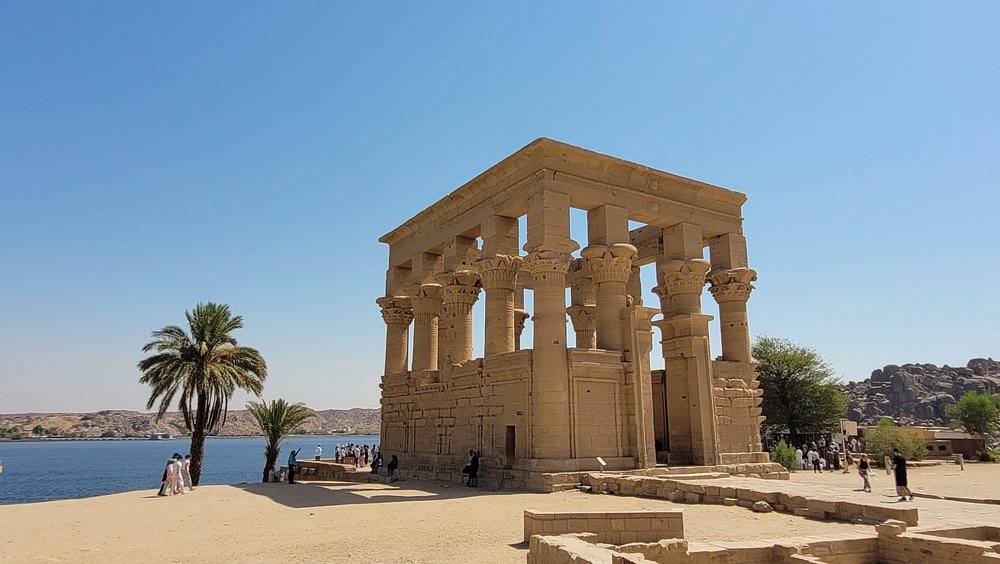
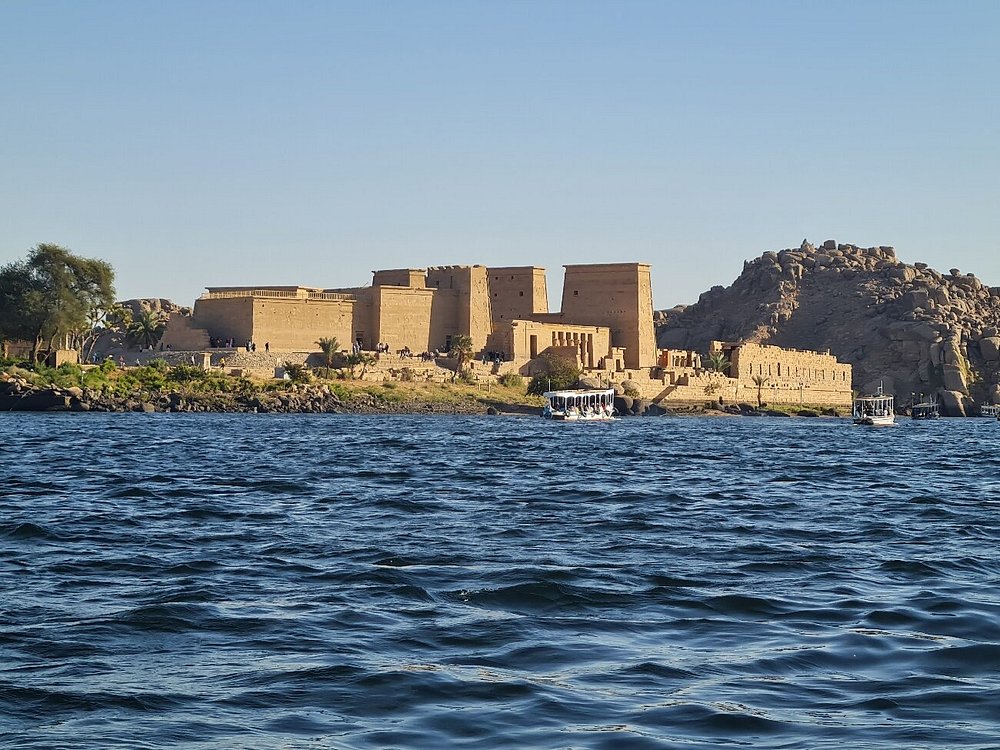
Sail the last stretch to Aswan and disembark. Visit the Temple of Philae by motorboat and the Aswan High Dam, then glide round the granite islands on a traditional felucca at sunset.
- Philae: motorboat crossing to Agilkia Island
- Aswan High Dam and view over Lake Nasser
- Felucca ride past Elephantine Island
- Optional Nubian village visit (extra cost)
Day 8: Aswan Departure
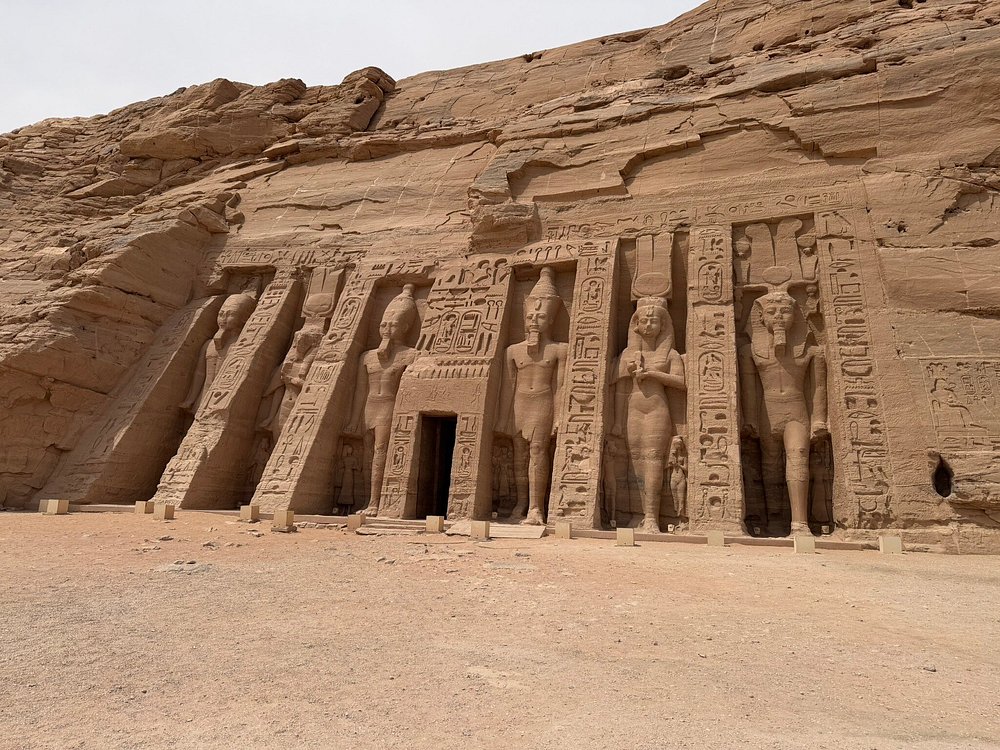
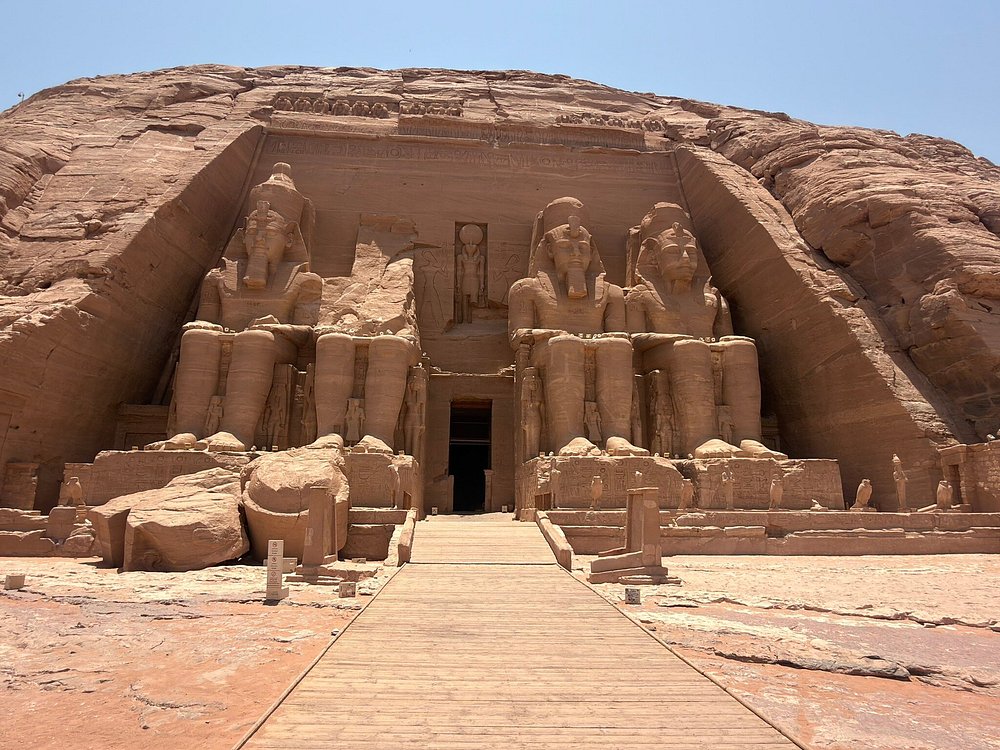
Enjoy a final breakfast and transfer privately to Aswan airport for your onward flight. If you would like Abu Simbel, we can add an early-morning excursion before departure on request.
- Private transfer to the airport
- Optional extension: Abu Simbel temples or a Red Sea stay in Hurghada

Places You Will Visit and Their History
Understanding what you see makes the Egypt Nile cruise holiday far richer. Here is a short history of each major stop in the programme.
Giza Pyramids and the Great Sphinx
The Pyramids of Giza were built around 2600–2500 BCE during the 4th Dynasty for the pharaohs Khufu, Khafre and Menkaure. The Great Pyramid of Khufu stood about 146 metres high and was the tallest human-made structure for nearly 4,000 years. The nearby Great Sphinx, carved from a single limestone outcrop, is about 73 metres long and is usually linked to Khafre.
Grand Egyptian Museum
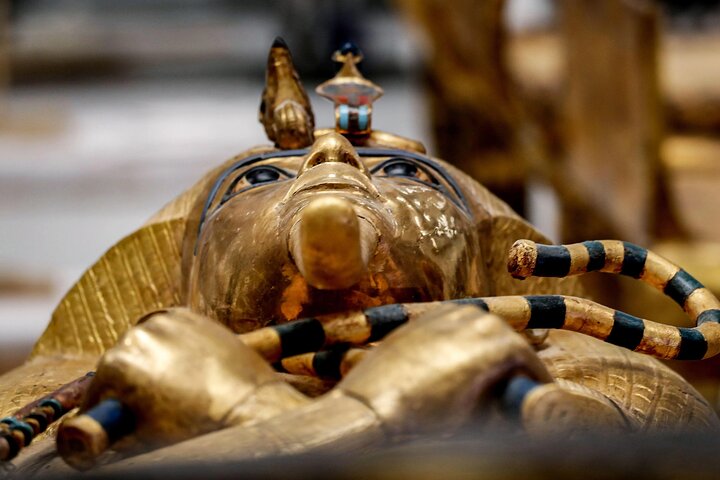
The Grand Egyptian Museum beside the Giza Plateau is the largest museum in the world dedicated to a single civilisation. It shows tens of thousands of artefacts and, for the first time, the full collection of Tutankhamun, whose tomb Howard Carter discovered in 1922. The Grand Staircase displays monumental statues of kings and gods.
Karnak Temple
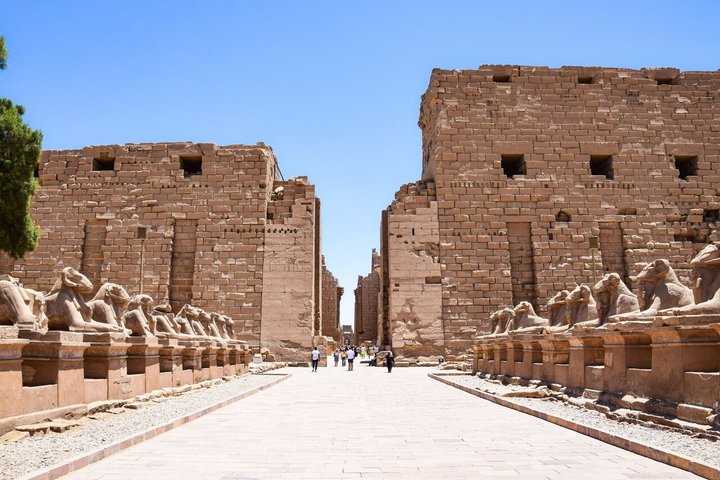
Karnak in Luxor was the main temple of Amun-Ra and grew over roughly 2,000 years as successive pharaohs added pylons, obelisks and halls. Its Great Hypostyle Hall holds 134 giant columns, a forest of stone that was completed under Seti I and Ramesses II. It remains the largest religious complex ever built.
Luxor Temple
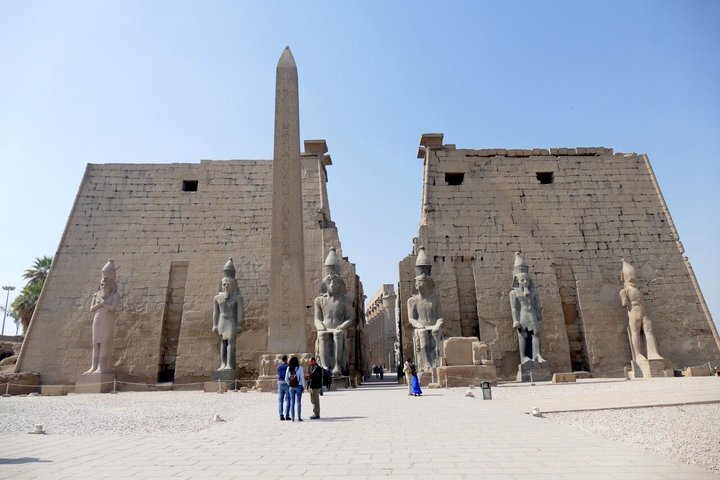
Built mostly by Amenhotep III and expanded by Ramesses II around 1400–1200 BCE, Luxor Temple hosted the Opet Festival, when statues of the gods sailed from Karnak. An ancient avenue of sphinxes, about 2.7 km long, once linked the two temples.
Valley of the Kings
From about 1539 to 1075 BCE, New Kingdom pharaohs were buried in rock-cut tombs on the Theban West Bank, hidden from the tomb robbers who plundered pyramids. The Valley of the Kings contains more than 60 tombs, with walls painted with the Book of the Dead and other funerary texts.
Temple of Hatshepsut
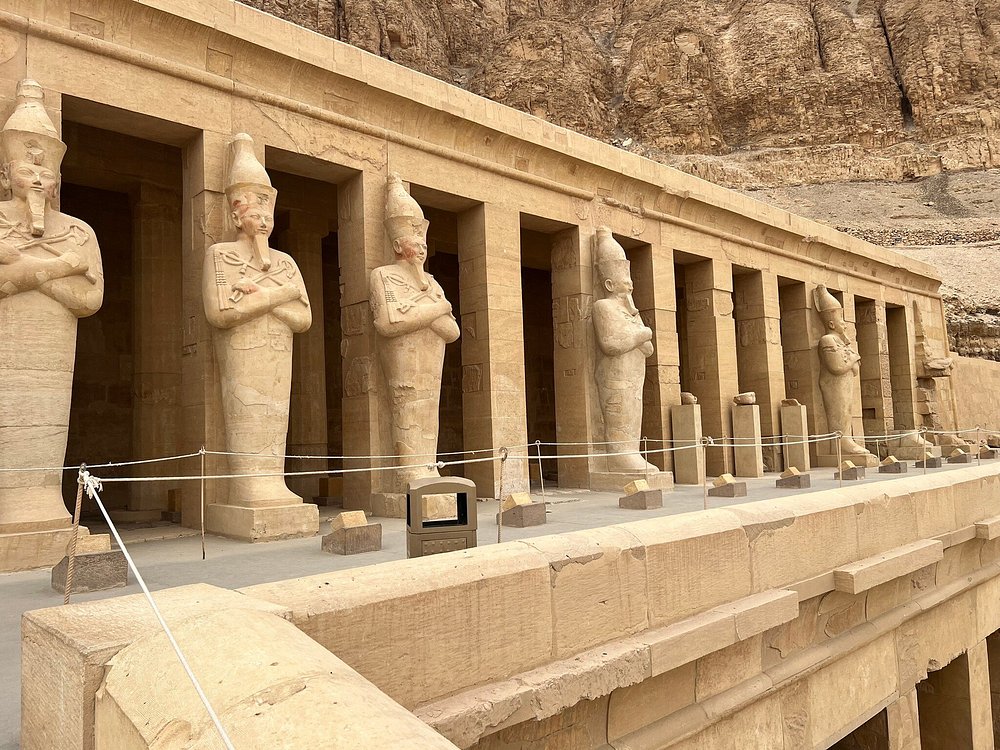
Hatshepsut ruled as pharaoh around 1479–1458 BCE and built her mortuary temple at Deir el-Bahari, traditionally credited to her official Senenmut. Its terraced colonnades record her trading expedition to the land of Punt.
Colossi of Memnon
These two 18-metre statues of Amenhotep III once guarded his vast mortuary temple. In Roman times travellers believed the northern statue sang at dawn after earthquake damage, and the legend of Memnon made it a tourist attraction nearly 2,000 years ago.
Esna and the Temple of Khnum
Esna honoured Khnum, the ram-headed god who shaped humans on his potter's wheel. The surviving columned hall dates from the Roman period, and its ceiling carries astronomical scenes and hymns. The Esna lock, built in the early 20th century, is still a working part of Nile navigation.
Temple of Horus at Edfu
Built between 237 and 57 BCE under the Ptolemies, the Temple of Horus at Edfu is among the best-preserved ancient temples in Egypt because desert sand and a village covered it for centuries. Its walls retell the myth of Horus defeating Seth.
Temple of Kom Ombo
Begun in the Ptolemaic era, Kom Ombo is a double temple, with one half for the crocodile god Sobek and the other for Haroeris, a form of Horus. Reliefs show surgical instruments, a rare glimpse of ancient Egyptian medicine, and the Crocodile Museum displays mummified crocodiles.
Philae Temple
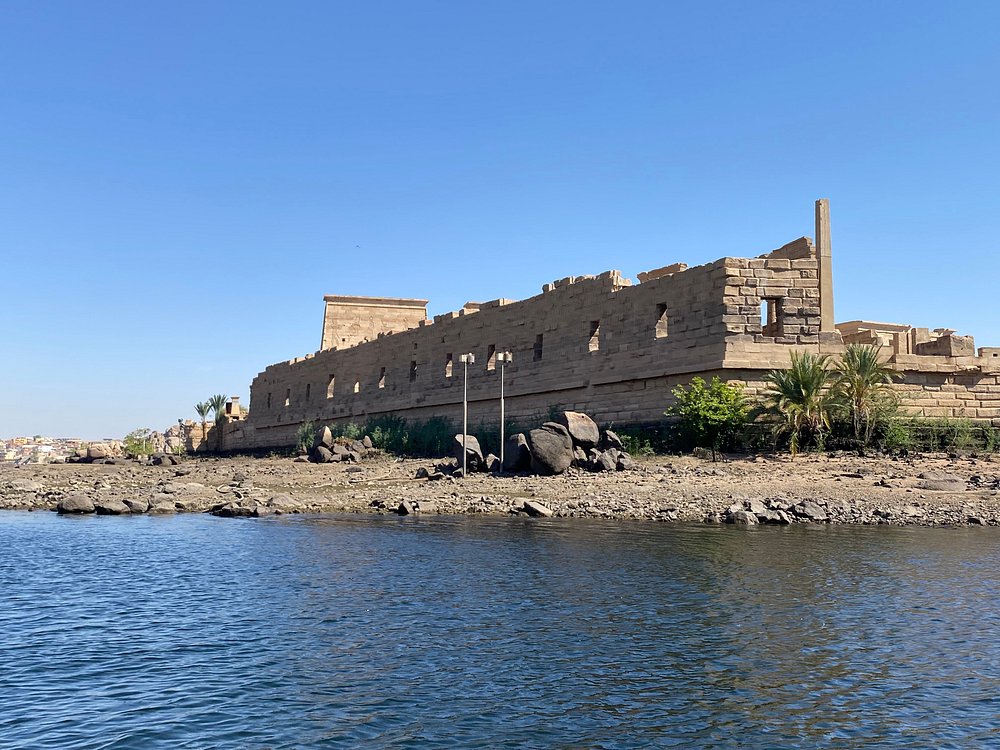
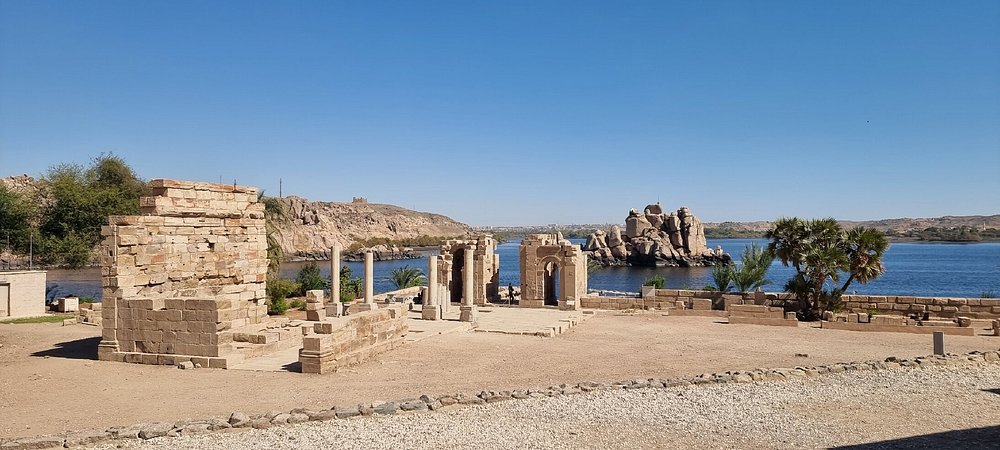
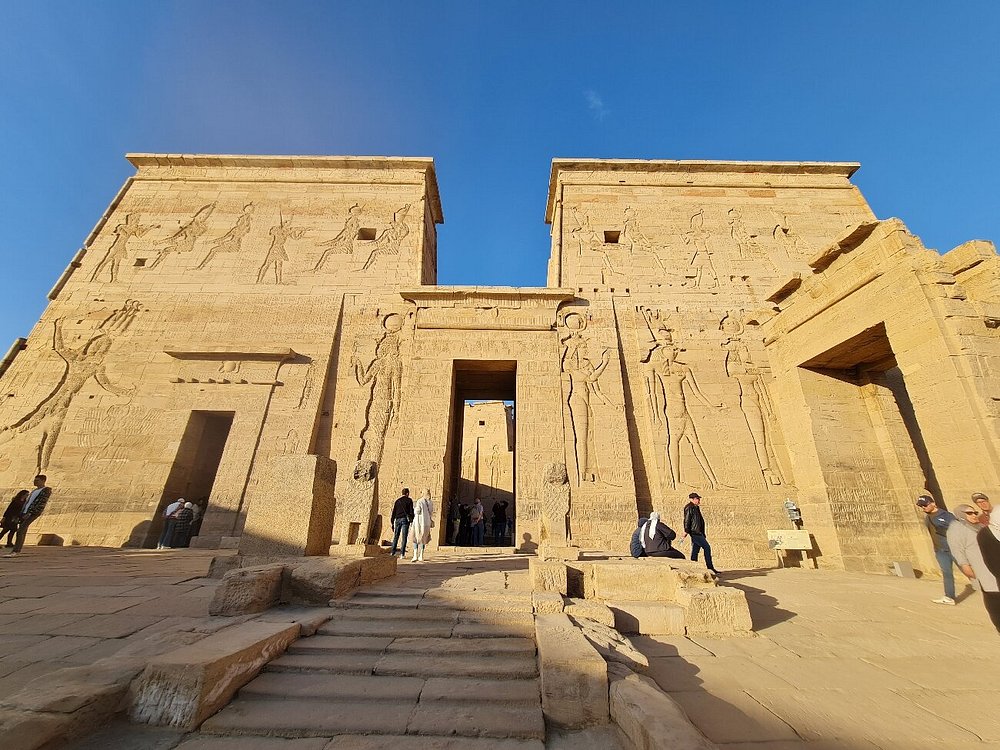
The Temple of Isis at Philae was a major pilgrimage centre from the Ptolemaic period. Threatened by flooding after the dams, it was dismantled and rebuilt on Agilkia Island between 1972 and 1980 under a UNESCO campaign. The last known hieroglyphic inscription, dated 394 CE, was carved here.
Aswan High Dam and Lake Nasser
Built between 1960 and 1970, the Aswan High Dam ended the Nile's annual flood and created Lake Nasser, one of the largest man-made lakes in the world. It also forced the UNESCO rescue of Nubian monuments such as Abu Simbel and Philae.
What Is a Dahabiya Nile Cruise?
The word Dahabiya comes from the Arabic for "golden". These shallow-draft sailing boats with two lateen sails became popular with European travellers and writers in the 19th century, who rented them to explore Upper Egypt in privacy. Today, a Dahabiya Nile cruise keeps that spirit alive with a few comfortable cabins, a sun deck, and a crew that includes a captain, chef and sailors.
Unlike a large cruise ship, a Dahabiya can moor at quiet banks, so you may enjoy swimming-free deck time, village walks and temple visits away from tour crowds. All meals on board are freshly prepared, and the boat is private to your party or a small group.
Activities on This Holiday
Accommodation
You spend two nights in Cairo, one night in Luxor, three nights on the Dahabiya and one night in Aswan. The hotel category and the specific Dahabiya are confirmed in your written proposal according to your budget and dates. Ask for a river-view room if the view matters to you.
Transport
All airport transfers, hotel transfers and sightseeing drives are private and air-conditioned. The Cairo to Luxor leg is a domestic flight, the Luxor to Aswan leg is the Dahabiya cruise, and your departure transfer in Aswan goes to the airport. Your quotation states exactly which flights are included.
What Is Included and Not Included
Final inclusions are always confirmed in writing before payment.
Prices
The price depends on your dates, number of travellers, hotel category, Dahabiya choice and flights. Send us your plan and we will reply with a clear written quotation.
Booking and Cancellation
Share your dates, number of adults and children and preferred hotel level. We send a personalised itinerary, you approve the details, and you pay by Cash, PayPal, Binance, Visa or Mastercard. Cancellation and amendment terms depend on the Dahabiya and hotels selected, so they are stated clearly in your written quotation before you confirm. You can also call us on +20 100 925 5585.
Best Time to Go and What to Pack
The best time for a Nile cruise in Egypt is October to April, when days are warm and nights are cool. Dahabiyas generally sail in the cooler season, so confirm availability for your dates. Pack light cotton clothing with covered shoulders and knees for temples, comfortable walking shoes, sun protection, a light jacket for evenings on deck, and your passport.
Frequently Asked Questions
What is a Dahabiya Nile cruise?
Is a Dahabiya cruise worth it?
Can I change the hotels or trip length?
Are international flights included?
Can I add Abu Simbel or Hurghada?
Related Tours and Guides
Browse all Nile cruise and beach packages, or read about Cairo and Giza, Luxor and Aswan and Abu Simbel.