

The 8-day Middle Egypt overland holiday from Cairo to Luxor follows the Nile Valley by road, linking the Pyramids with the great temples of the south through a region most tourists fly over. You travel Cairo → Minya → Amarna → Abydos → Dendera → Luxor, visiting Akhenaten's capital, the sacred city of Osiris and the temple of Hathor before reaching Thebes.
This private Egypt overland tour is for travellers who want depth, not just highlights. A private Egyptologist connects the sites into one story, a private vehicle handles every transfer, and the plan can be adjusted to your dates, pace and budget before booking.
Tour Overview
Middle Egypt is the stretch of the Nile Valley between Cairo and Luxor, and it contains some of the most atmospheric ancient sites in the country. This Cairo to Luxor overland tour covers the Giza plateau and the Grand Egyptian Museum, rock tombs of provincial governors, the abandoned city of Akhenaten, the temple of Seti I at Abydos, the temple of Hathor at Dendera and the monuments of Luxor.
| Duration | 8 days / 7 nights |
| Start and end | Arrival in Cairo, departure from Luxor |
| Route | Cairo → Minya → Amarna → Abydos → Dendera → Luxor |
| Tour type | Private Egyptologist and vehicle, tailor-made planning |
| Main sites | Giza, Beni Hassan, Tell El Amarna, Abydos, Dendera, Karnak, Valley of the Kings |
| Accommodation | 2 nights Cairo, 1 night Minya, 1 night Sohag, 3 nights Luxor |
| Price | Price on Request, confirmed in a written quotation |
Tour Highlights
Day-by-Day Itinerary: 8-Day Middle Egypt Overland Holiday from Cairo to Luxor
This is the recommended plan. Site access in Middle Egypt can change, so your guide confirms opening arrangements and adjusts the order of visits if needed.
Day 1: Arrival in Cairo
Your representative meets you at Cairo International Airport and drives you to your hotel. After resting, you meet your Egyptologist for a briefing on the route.
- Private airport meet and assist
- Hotel check-in and trip briefing
- Evening at leisure
Day 2: Giza Pyramids and Grand Egyptian Museum
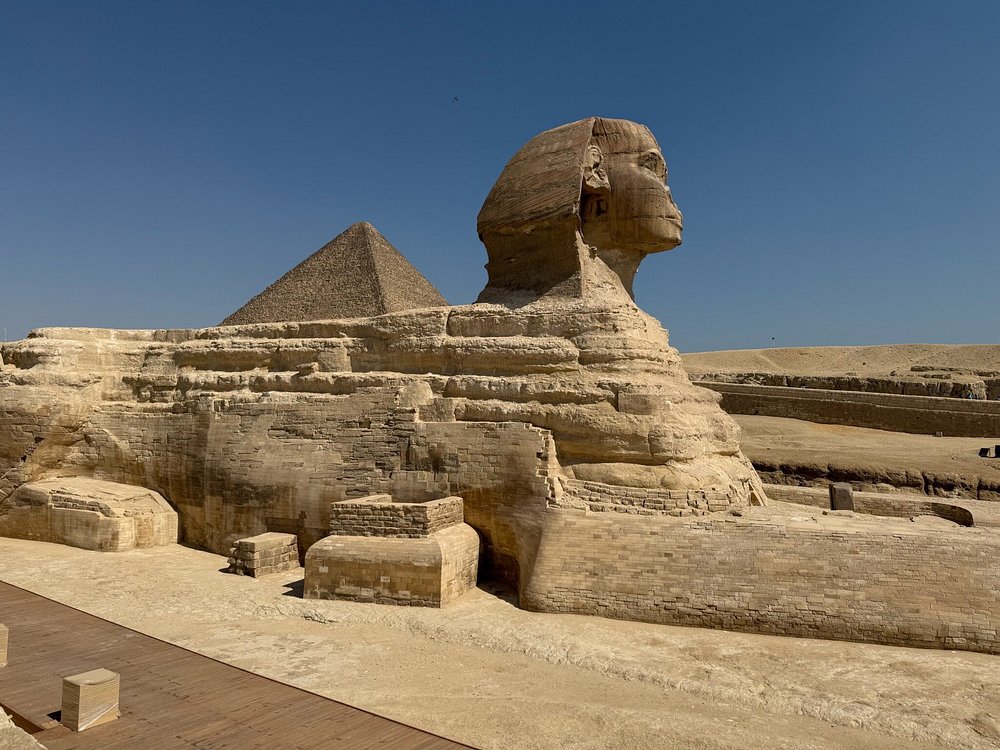
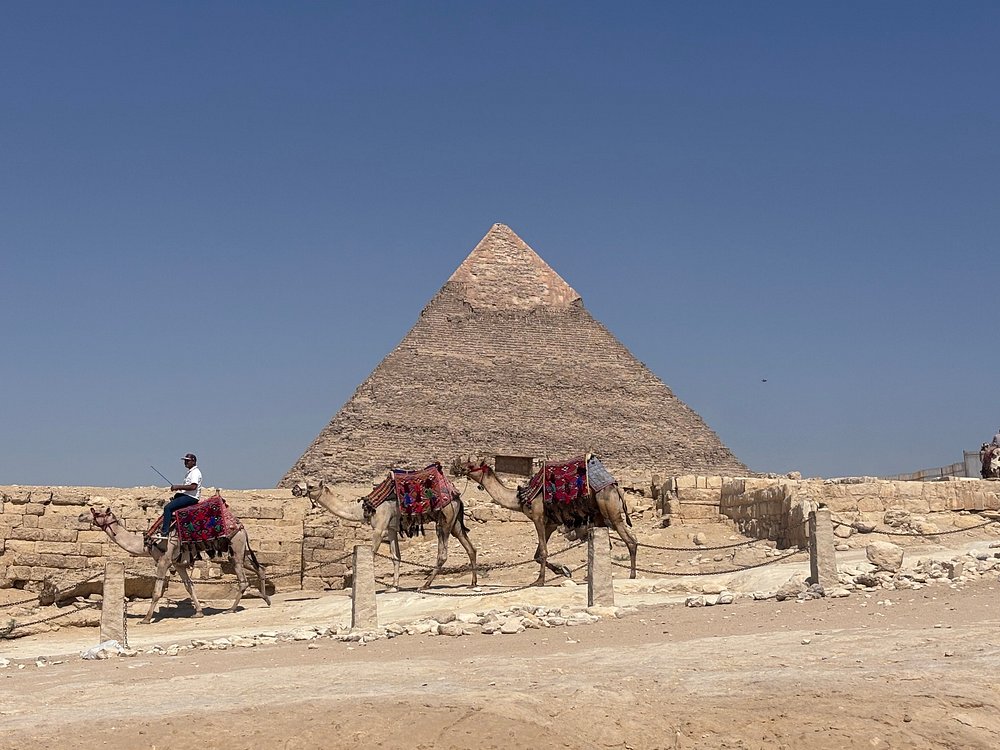
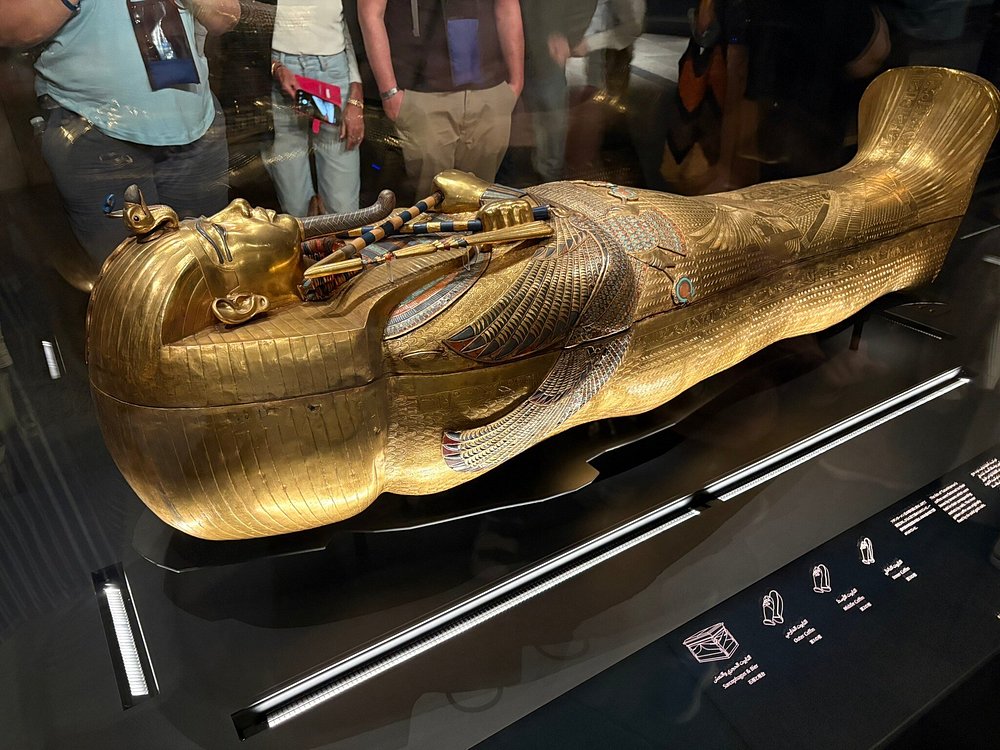
Visit the Giza Plateau for the three great pyramids and the Sphinx, then continue to the Grand Egyptian Museum for the Tutankhamun collection.
- Great Pyramid, Pyramid of Khafre and Sphinx
- Panoramic viewpoint over the three pyramids
- Grand Egyptian Museum and the Grand Staircase
Day 3: Cairo to Minya and Beni Hassan
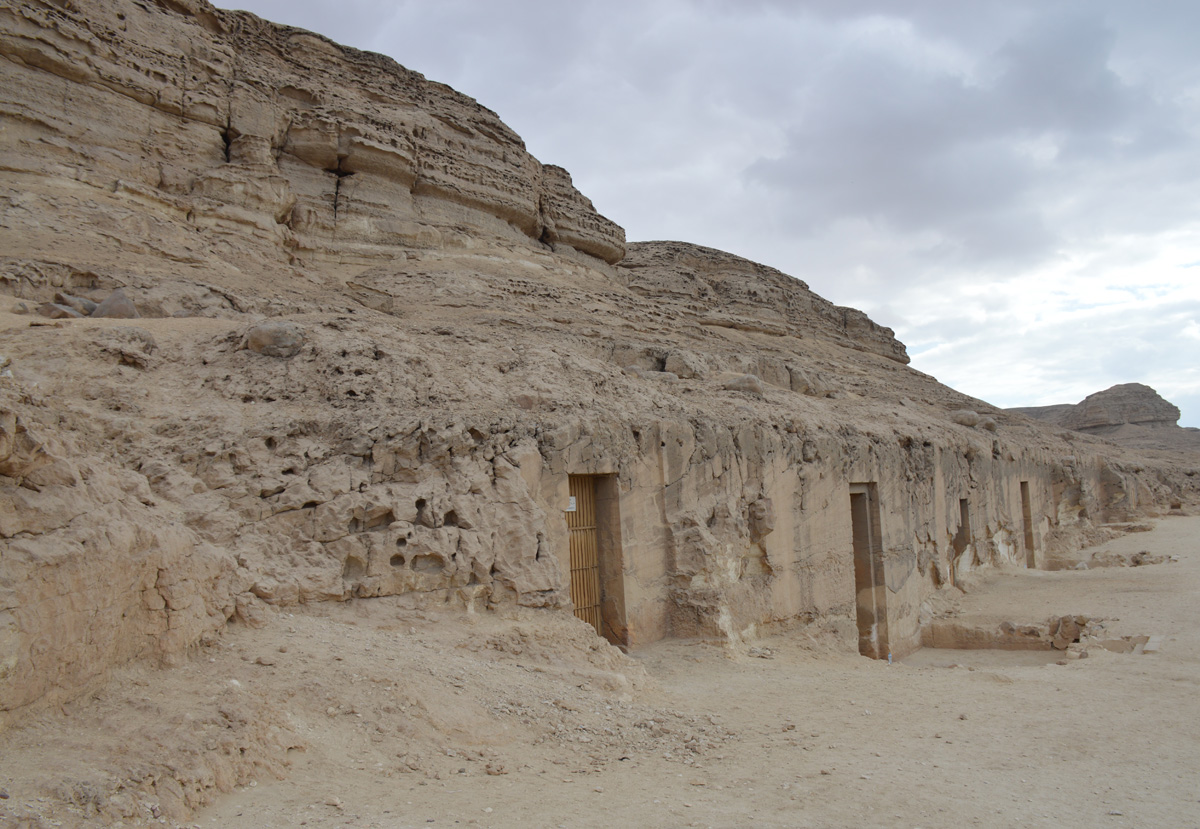
Drive south along the Nile to Minya, around four hours from Cairo. In the afternoon, climb to the rock-cut tombs of Beni Hassan.
- Drive from Cairo to Minya with stops
- Beni Hassan tombs of Middle Kingdom governors
- Sunset on the Minya corniche
Day 4: Tell El Amarna and Drive to Sohag
Spend the morning at Tell El Amarna, the city of Akhenaten, then continue south by road to Sohag for the night.
- Northern and southern cliff tombs at Amarna
- Visitor centre and city overview
- Afternoon drive to Sohag, around four hours
Day 5: Abydos, Dendera and Arrival in Luxor
Visit the Temple of Seti I at Abydos in the morning, then drive to Dendera for the Temple of Hathor, before continuing to Luxor.
- Temple of Seti I, the King List and the Osireion
- Drive to Dendera, around one and a half hours
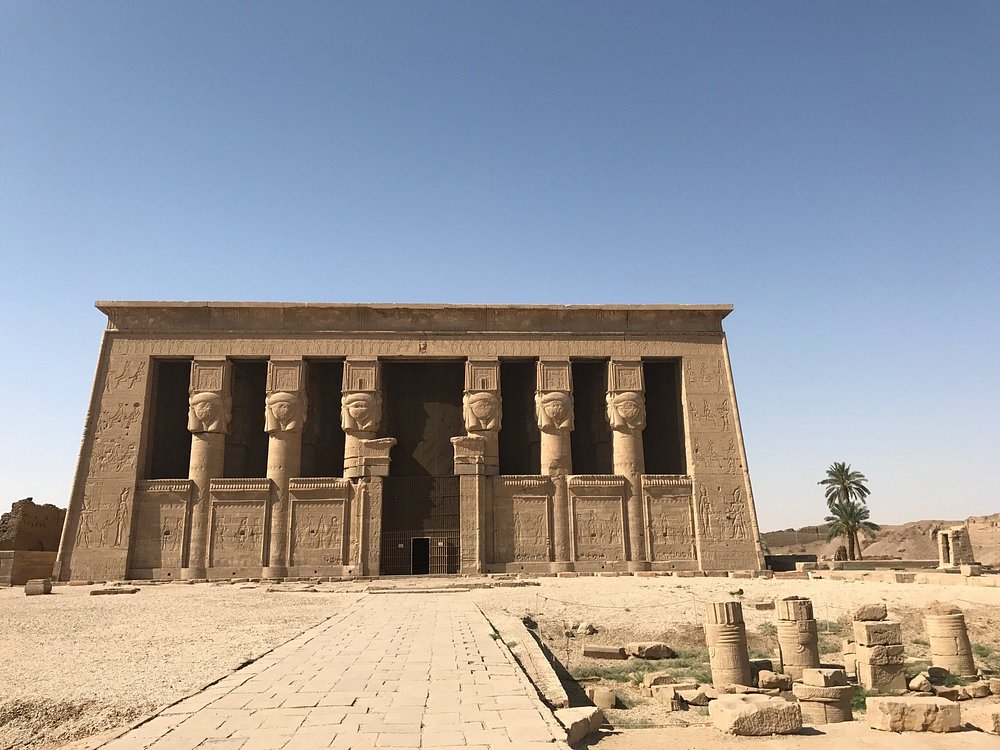
- Temple of Hathor, crypts and roof chapels
- Evening arrival in Luxor
Day 6: Luxor East Bank
Explore the east bank of Thebes: Karnak Temple in the morning and Luxor Temple as the light softens in the evening.
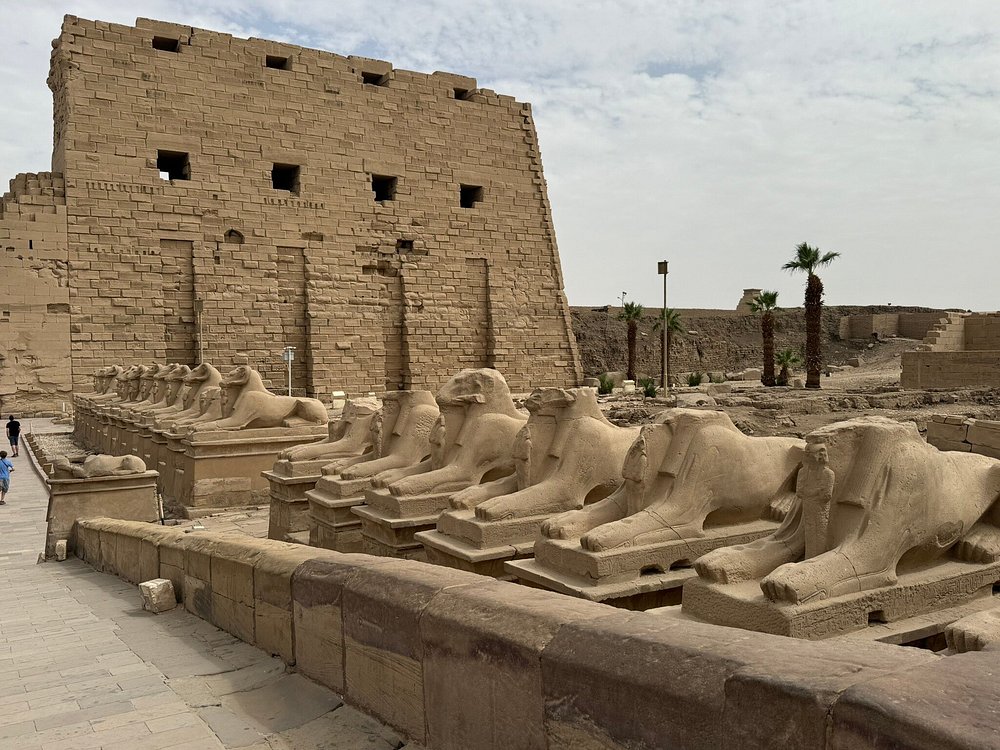
- Karnak Temple and its Great Hypostyle Hall
- Free time at the hotel or Luxor souq
- Luxor Temple at sunset
Day 7: Luxor West Bank
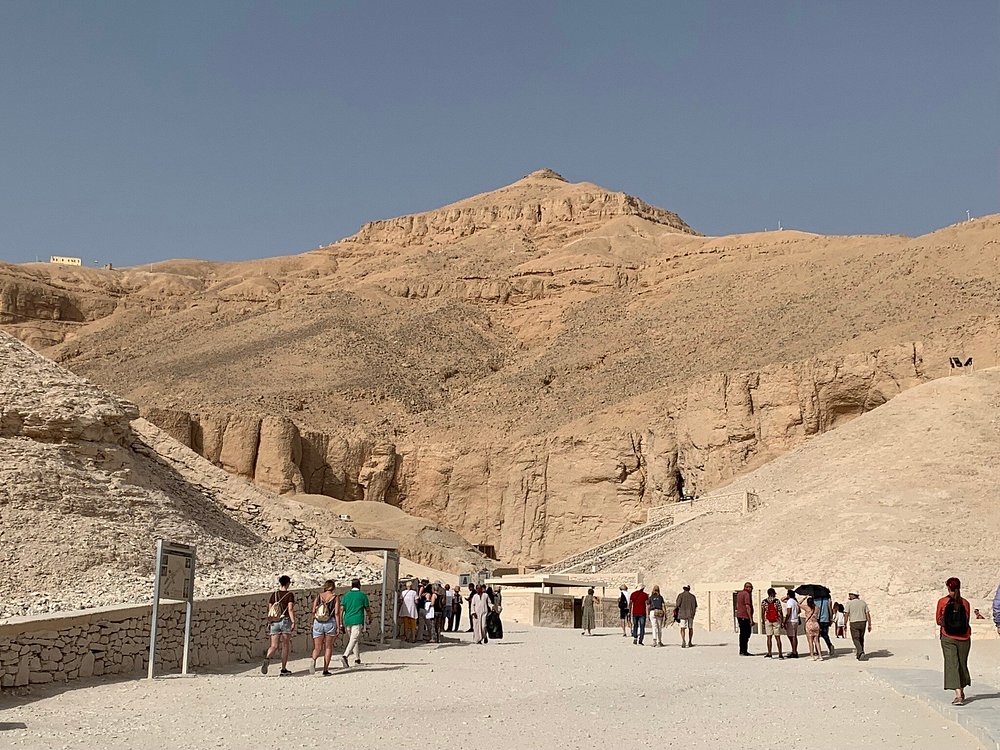
Cross to the west bank for the Valley of the Kings, the Temple of Hatshepsut and the Colossi of Memnon. The afternoon is free to relax.
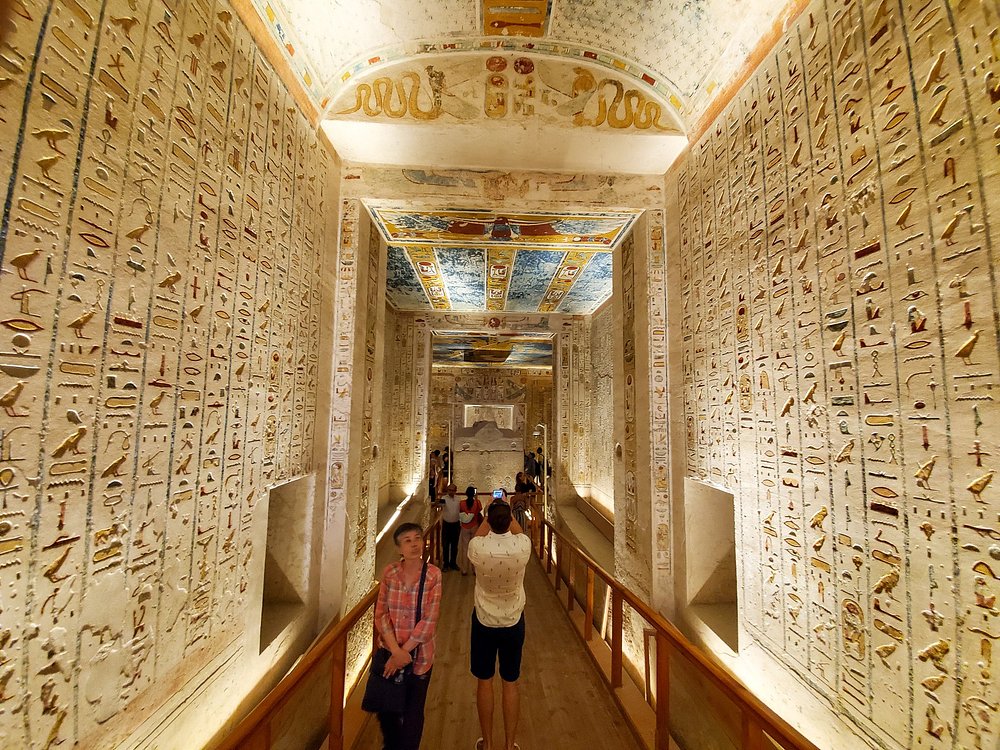
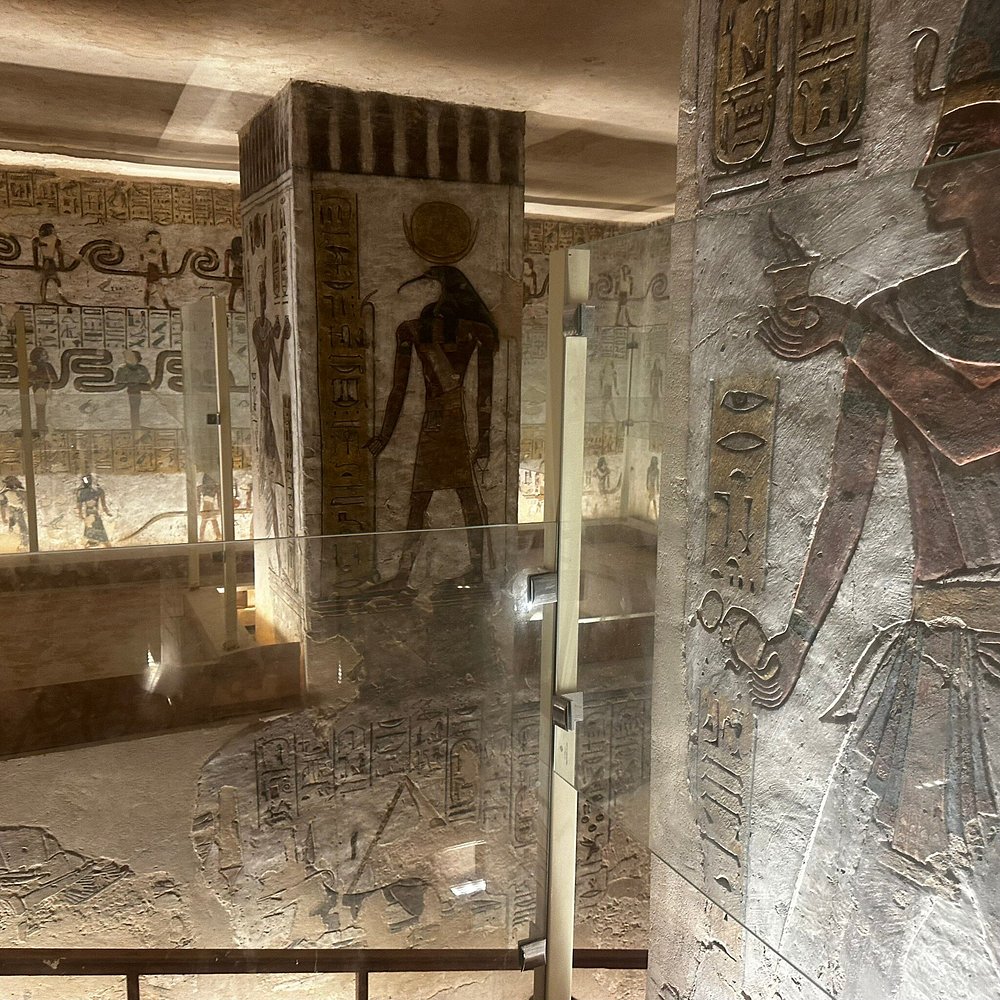
- Valley of the Kings (three tombs with the standard ticket)
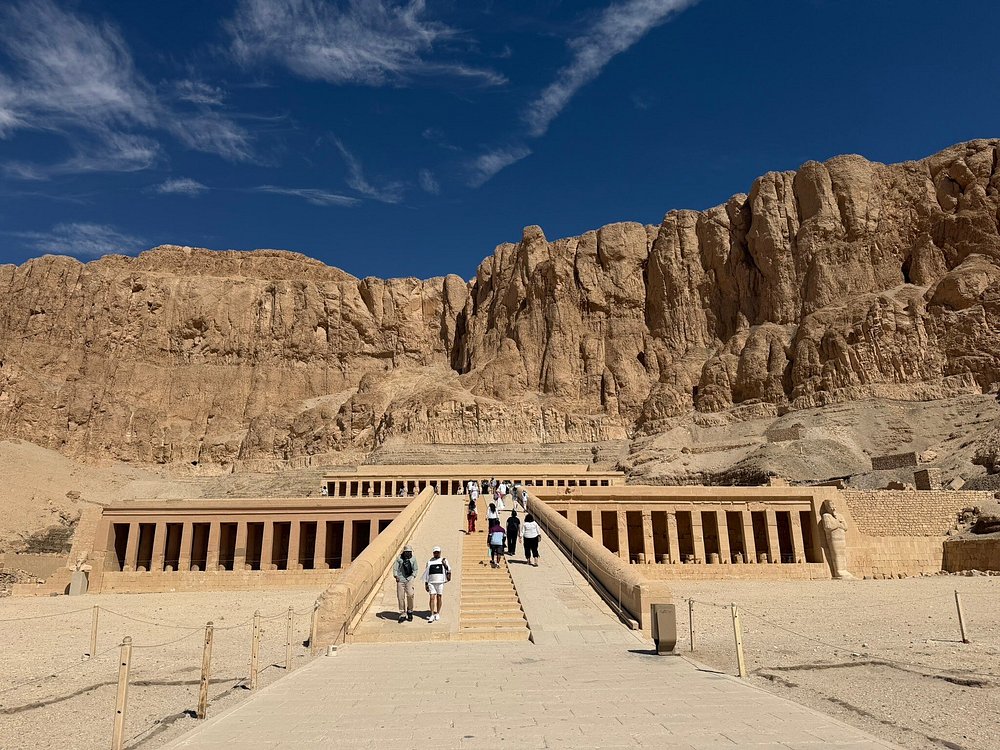
- Temple of Hatshepsut at Deir el-Bahari
- Colossi of Memnon photo stop
- Optional hot-air balloon at dawn (extra cost)
Day 8: Departure from Luxor
After breakfast, a private transfer takes you to Luxor International Airport for your onward flight, or you can extend to Aswan or a Nile cruise.
- Private airport transfer
- Optional extension to Aswan, a Nile cruise or the Red Sea




Places You Will Visit and Their History
This Middle Egypt itinerary moves through five thousand years of history. Here is the background to each stop.
Giza Pyramids and the Sphinx
The three Giza pyramids were raised around 2600 to 2500 BCE for the pharaohs Khufu, Khafre and Menkaure. The Great Pyramid was the tallest building in the world for roughly 4,000 years, and the neighbouring Sphinx is carved from a single outcrop of limestone.
Grand Egyptian Museum
This museum beside the plateau displays the sweep of Egyptian history and shows the complete Tutankhamun collection together, more than a century after Howard Carter discovered the tomb in 1922.
Minya and Beni Hassan
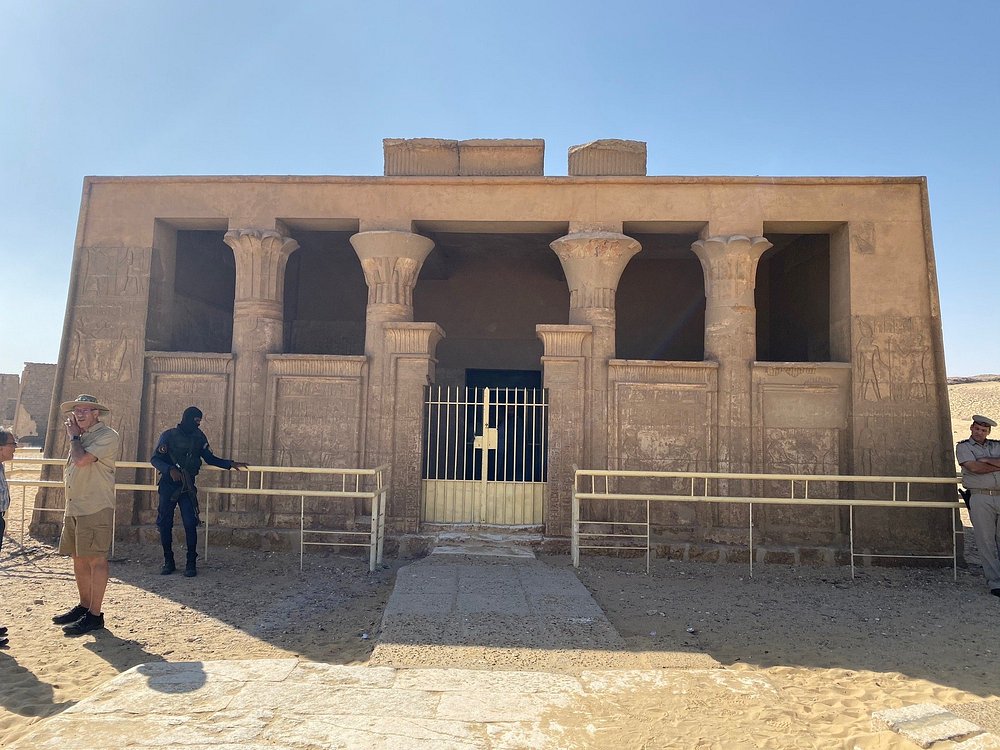
Minya is the main city of Middle Egypt. Across the river, the cliffs of Beni Hassan hold rock-cut tombs of regional governors from around 2000 to 1800 BCE, painted with scenes of wrestling, hunting, farming and foreign traders.
Tell El Amarna
In about 1346 BCE, Akhenaten founded Akhetaten as a new capital for the worship of the Aten, the sun disk. He lived here with Nefertiti and the royal family. The city was abandoned within a generation, leaving cliff tombs with unique, naturalistic art, boundary stelae and the clay tablets known as the Amarna Letters.
Abydos and the Temple of Seti I
Abydos was the cult centre of Osiris, god of the dead, and pilgrims came here for thousands of years. The temple of Seti I, built around 1290 BCE and completed by Ramesses II, has superbly carved painted reliefs and the famous Abydos King List, which names 76 of Egypt's rulers. Behind it lies the mysterious Osireion.
Early Dynastic Abydos
In the desert at Umm el-Qa'ab lie the tombs of Egypt's earliest kings, from around 3000 BCE. Later Egyptians believed one of them was the tomb of Osiris himself, which turned Abydos into a pilgrimage site.
Dendera Temple of Hathor
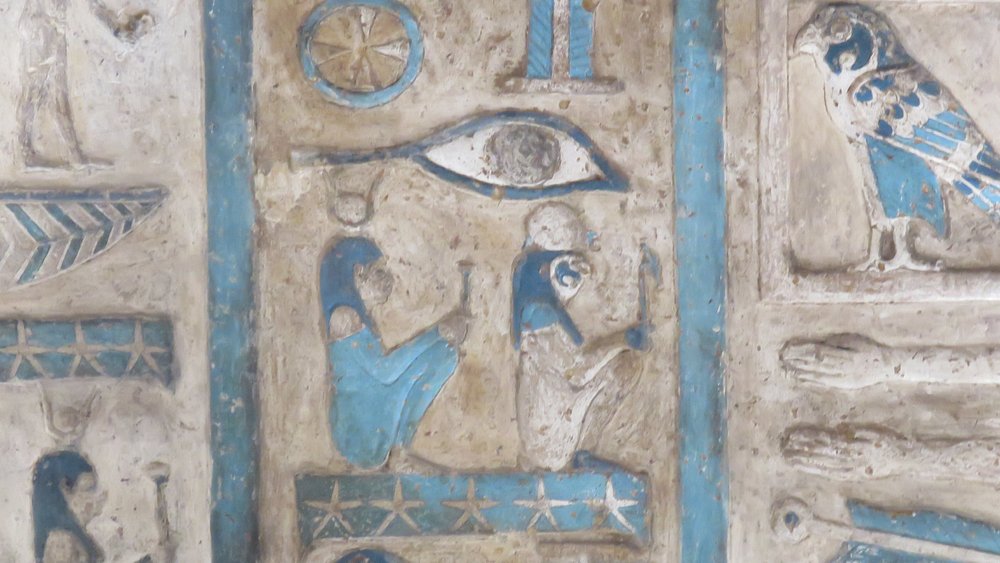
The Temple of Hathor at Dendera, mostly built in the Ptolemaic and Roman periods, is one of Egypt's best-preserved temples. Hathor-headed columns, a roof with chapels for the Osiris rites and a ceiling painted with astronomical scenes, with its famous round zodiac now in Paris, make it a highlight. The rear wall shows Cleopatra VII with her son Caesarion.
Karnak and Luxor Temple
Karnak was the principal temple of Amun-Ra, extended by pharaohs for around 2,000 years, and its Great Hypostyle Hall holds 134 giant columns. Luxor Temple, begun by Amenhotep III, hosted the Opet Festival and was linked to Karnak by an avenue of sphinxes.
Valley of the Kings and Hatshepsut
Between about 1539 and 1075 BCE, New Kingdom pharaohs were buried in hidden rock-cut tombs in the Valley of the Kings. The nearby temple of Hatshepsut at Deir el-Bahari, with its terraced colonnades, records her expedition to Punt, and the Colossi of Memnon mark the gate of Amenhotep III's vanished temple.
Why Travel Overland from Cairo to Luxor?
Most visitors fly between Cairo and Luxor, but the road through Middle Egypt reveals a quieter, more authentic Egypt. You pass farmland, villages and small towns, and you reach sites that most itineraries skip, often with only a few other visitors. The journey also shows how ancient Egypt developed from north to south, from the Old Kingdom pyramids to the New Kingdom temples.
The trade-off is distance. Days 3 to 5 include long drives, so the plan is built with comfortable stops and overnight stays rather than rushing. If you prefer a shorter version, ask us for a flight from Cairo to Luxor and a focused Middle Egypt extension.
Activities on This Holiday
Accommodation and Meals
You stay two nights in Cairo, one night in Minya, one night in Sohag and three nights in Luxor. Hotel category is confirmed in your written proposal according to your budget and dates. Hotels in Minya and Sohag are simpler than in major tourist cities. Breakfast is included at hotels, and other meals follow your quotation.
Transport and Driving Times
All transfers and sightseeing drives use a private air-conditioned vehicle. Approximate driving times are:
| Cairo to Minya | Around 4 hours |
| Amarna to Sohag | Around 4 hours |
| Sohag to Abydos | Around 1 hour |
| Abydos to Dendera | Around 1.5 hours |
| Dendera to Luxor | Around 1 hour |
Times are approximate and depend on traffic, checkpoints and stops. Your quotation confirms the vehicle for your group size.
What Is Included and Not Included
Final inclusions are always confirmed in writing before payment.
Prices
The price depends on your dates, hotel category, number of travellers and vehicle type. Send us your plan and we will reply with a clear written quotation.
| Book on WhatsApp |
| [email protected] |
Booking and Cancellation
Share your dates, number of adults and children and preferred comfort level. We send a personalised itinerary, you approve the details, and you pay by Cash, PayPal, Binance, Visa or Mastercard. Cancellation and amendment terms depend on the hotels selected and are stated in your written quotation. Call or message us on +20 100 925 5585.
Best Time to Go and What to Pack
The best time for a Middle Egypt overland tour is October to April, when days are warm and open-air walking is comfortable. Summer is hot, so early starts are essential. Pack light cotton clothing with covered shoulders and knees for temples, sturdy walking shoes, a sun hat, sunscreen, a small torch for tombs and your passport.
Frequently Asked Questions
Is this overland route safe and open to visitors?
How much driving is involved?
Are the hotels in Minya and Sohag comfortable?
Can I travel in the reverse direction from Luxor to Cairo?
Can I extend to Aswan or a Nile cruise?
Related Tours and Guides
Browse all Egypt holiday packages, or read about Luxor and Cairo and Giza.
Eight days from the Pyramids to Luxor through Minya, Amarna, Abydos and Dendera with a private Egyptologist. Share your dates and we will prepare your personal proposal.
| Book on WhatsApp |
| Call +20 100 925 5585 |
| Email [email protected] |
Available daily for trip planning and booking support · Pay by Cash, PayPal, Binance, Visa or Mastercard