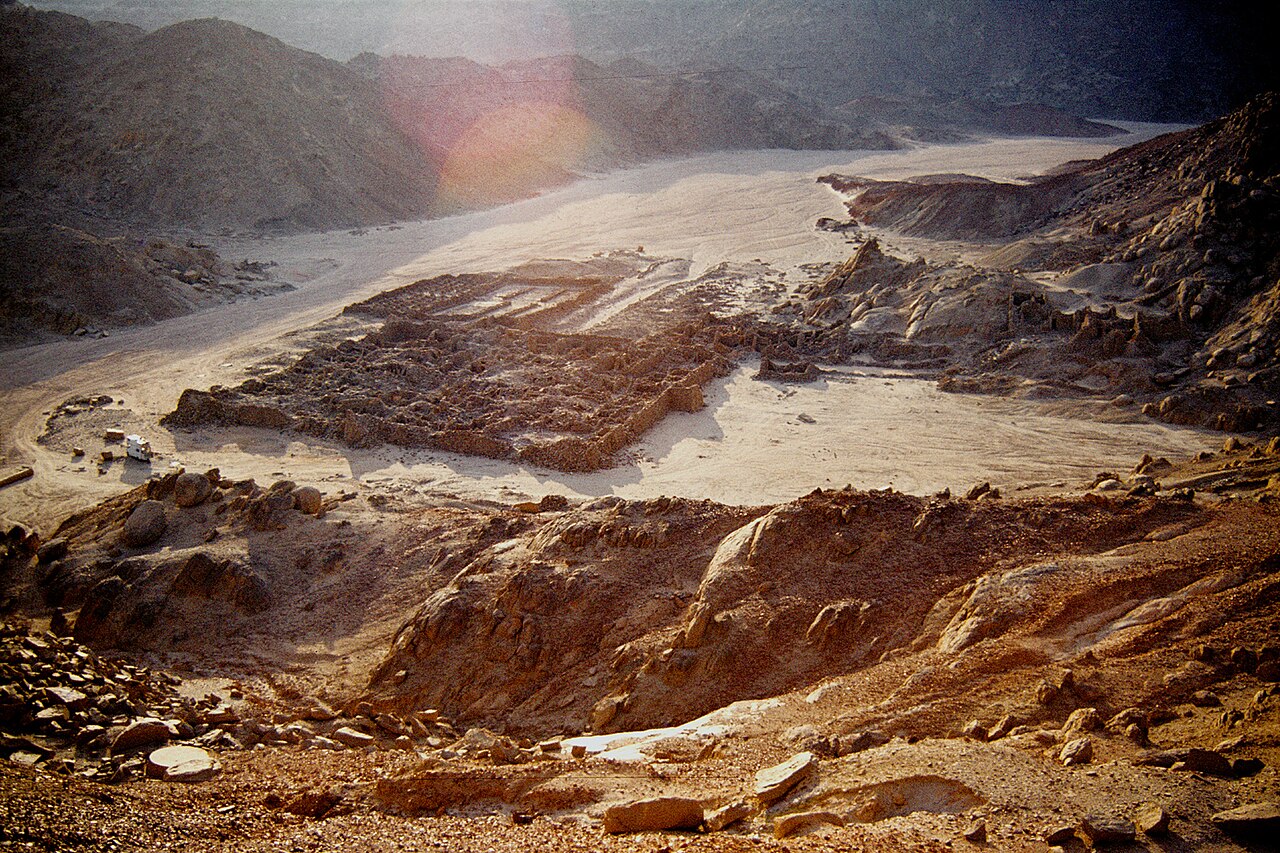
Mons Porphyrites and Mons Claudianus are two of the most important Roman quarry landscapes in Egypt’s Eastern Desert. Hidden between the Nile Valley and the Red Sea, these remote extraction centres supplied imperial purple porphyry, granodiorite and enormous architectural elements for monuments across the Roman world. Their abandoned columns, workshops, forts, roads, wells and thousands of written ostraca reveal not only how stone was cut, but how Rome organised labour and transport in one of Egypt’s harshest environments.
This guide explains the difference between the two sites, the stones they produced, the people who lived there, the desert supply network and what modern travellers should understand before considering a specialised archaeological visit.
Roman quarries in Egypt’s Eastern Desert: key facts
- Mons Porphyrites, also called Mons Porphyrius, was the Roman Empire’s principal source of imperial purple porphyry.
- Mons Claudianus produced pale granodiorite used for giant columns and architectural blocks.
- The quarry districts were connected to the Nile by fortified roads, wells and supply stations known as praesidia.
- Most intensive Roman activity belongs to the first three centuries AD, although the histories of the two complexes differ.
- Finds include unfinished columns, quarry faces, tools, workshops, baths, animal facilities and more than ten thousand ostraca at Mons Claudianus.
Mons Porphyrites and the meaning of imperial purple
Mons Porphyrites lies in the Gebel Dokhan mountain area. The name refers to the purple porphyry extracted there, an exceptionally hard volcanic stone with a deep purple ground and pale mineral crystals. Once polished, it created a surface unlike common Egyptian granite. In Roman visual culture, purple was already associated with rank, ceremony and imperial authority, so porphyry became much more than a decorative material.
Emperors and elite patrons used Egyptian porphyry for columns, floors, basins, statues and sarcophagi. Its prestige came from several qualities at once: the colour was politically charged, the stone was difficult to work, the source was controlled, and every block had to cross a punishing desert before reaching the Nile. A finished object therefore advertised access to rare material, specialist craftsmanship and an imperial supply system capable of moving extreme weights across continents.
How porphyry was extracted
The landscape was a network rather than a single open pit. Stonecutters examined the rock for fractures, marked a block, cut channels and used iron tools and wedges to separate it from the mountain. Rough shaping near the quarry removed excess weight before transport. Fractured or rejected pieces were left behind, which is why the site preserves evidence for each stage of production. These abandoned blocks are valuable archaeological records of ancient engineering decisions and quality control.
Mons Claudianus and Rome’s monumental columns
Mons Claudianus is best known for granodiorite, a light-coloured stone quarried on a monumental scale. The surviving extraction areas include unfinished columns and blocks intended for prestigious imperial architecture. Moving one of these pieces was a project in itself. It required quarry specialists, metalworkers, timber, ropes, sledges, animals, road crews, guards and reliable water supplies.
Archaeologists have uncovered a fortified settlement with workshops, storage spaces, baths and animal installations. The evidence shows that the quarry was an organised community, not an isolated work gang. Administrators tracked deliveries and rations; soldiers protected the corridor; smiths repaired tools; drivers managed pack animals; and experienced stoneworkers judged the rock.
The ostraca: everyday voices from a Roman quarry
One of Mons Claudianus’s greatest archaeological contributions is its enormous collection of ostraca—potsherds or stone fragments used as convenient writing surfaces. Orders, receipts, names, delivery notes and private messages document food, tools, transport and daily concerns. They reveal a mixed population and a complicated labour system that included skilled workers and other personnel of different legal and social status.
These records also correct the simplistic image of Roman quarrying as brute force alone. The operation depended on planning, literacy, specialised knowledge and communication between the quarry, road stations and the Nile Valley.
How giant stones travelled from the desert to Rome
After extraction and rough shaping, stone had to move westward across the Eastern Desert. Purpose-built roads linked the quarry zones with the Nile. Fortified stations divided the journey into stages and provided water, food, shelter and security. Heavy loads probably moved slowly, with route preparation and seasonal timing reducing the risk of breakdown or heat stress.
At the Nile, blocks entered another transport system. Barges carried them north toward Alexandria, where they could be transferred to seagoing vessels for Mediterranean distribution. Some pieces travelled all the way to Rome; others were used elsewhere in the empire. The route connected mountain geology, desert infrastructure, river navigation and maritime trade into a single imperial chain.
Life, food and water in an extreme environment
The Eastern Desert looks empty, yet the archaeology records a carefully supplied human landscape. Wells and cisterns were essential, while grain, oil, wine and other foods had to arrive from cultivated areas. Archaeobotanical research indicates access to a surprisingly varied diet at major sites. Animal bones, textiles, ceramics and written documents add detail to the lives of people who worked far from the Nile.
Heat, dust and isolation remained constant risks. Tool failure or an injured animal could delay a transport column; a fracture could destroy months of work. The state’s investment in forts, roads and supplies explains how production was sustained despite those pressures.
Mons Porphyrites vs Mons Claudianus
| Feature | Mons Porphyrites | Mons Claudianus |
|---|---|---|
| Principal stone | Imperial purple porphyry | Pale granodiorite |
| Famous use | Imperial sculpture, sarcophagi and coloured architectural decoration | Monumental columns and large architectural elements |
| Historical value | Shows how colour and rarity expressed imperial power | Preserves exceptional evidence for quarry organisation and daily life |
| Landscape | Multiple quarry faces and mountain installations | Quarries, central settlement, workshops, baths and transport infrastructure |
Can travellers visit the Roman quarries today?
These are remote archaeological landscapes, not ordinary ticketed attractions. Access rules, permits, conservation restrictions, road conditions and security arrangements can change. An independent desert drive is inappropriate. Any proposed visit should be checked with experienced local specialists and undertaken only with suitable four-wheel-drive vehicles, water reserves, communications equipment and confirmed permissions.
Travellers who cannot access the sites can still understand their story through museums, Roman monuments containing Egyptian stone and a broader Eastern Desert itinerary. The historical value lies in seeing the full connection between the quarries, desert roads, Nile ports and Mediterranean architecture.
Why these quarries matter
Mons Porphyrites and Mons Claudianus transform the way we read Roman buildings. A polished column in Rome was the final stage of a story that began in an Egyptian mountain. Studying the Roman quarries of Egypt brings together archaeology, geology, ancient engineering, labour history and long-distance logistics. It also shows that the Eastern Desert was not an empty margin: it was an active industrial corridor tied directly to the political image of empire.
Frequently asked questions
What stone came from Mons Porphyrites?
The site supplied imperial purple porphyry, a hard volcanic stone whose colour became strongly associated with Roman rulers and elite monuments.
What was quarried at Mons Claudianus?
Mons Claudianus produced granodiorite used for monumental columns and other large architectural elements.
How did the Romans move the stone?
Blocks crossed the desert on organised roads supported by wells and fortified stations, continued by boat down the Nile and then moved through Alexandria into Mediterranean shipping networks.
Continue exploring Egypt’s Eastern Desert
Read our guide to Berenike and Myos Hormos, browse more Egypt history and travel guides, or request a tailor-made archaeological itinerary.
References and further reading
- OpenEdition: Stone quarrying in the Eastern Desert, including Mons Claudianus and Mons Porphyrites
- OpenEdition: Quarries, ports and praesidia—supply and exchange in the Eastern Desert
- OpenEdition: Roman life in the Eastern Desert—food, imperial power and quarry communities