Hatshepsut’s expedition to Punt is one of the most vivid records of ancient Egyptian Red Sea travel. Carved on the walls of her mortuary temple at Deir el-Bahari, the scenes show ships, sailors, the people and landscape of Punt, valuable trade goods and living incense trees brought back to Egypt. The reliefs combine history, royal ideology, religion and unusually detailed observations of a distant trading partner.
This guide explains when the voyage took place, what the Egyptians sought, how the fleet may have reached the Red Sea, what the temple reliefs show and why scholars still debate the location of the Land of Punt.
Hatshepsut’s Punt expedition: key facts
- The best-known expedition took place during the reign of Pharaoh Hatshepsut in Egypt’s Eighteenth Dynasty.
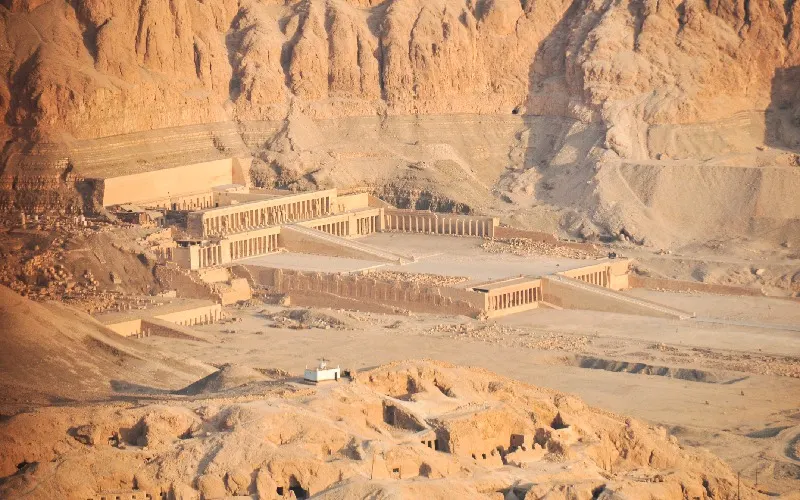
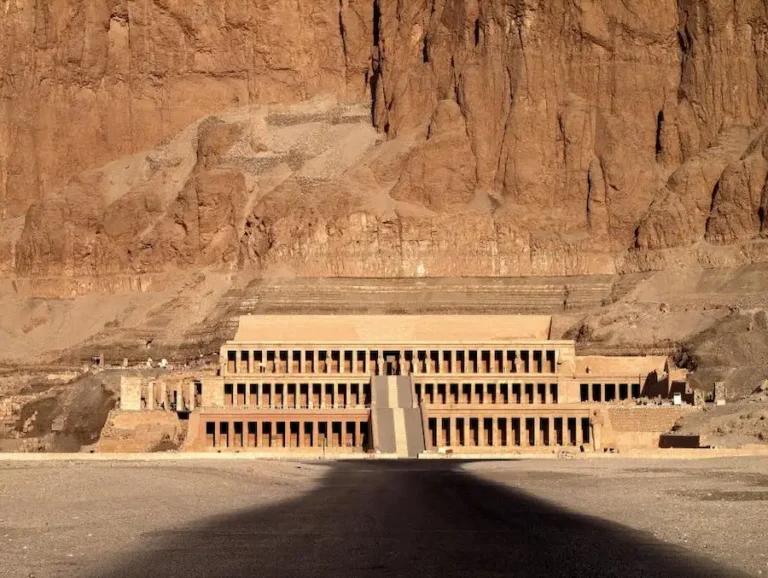
- The event is represented in the Punt colonnade of Hatshepsut’s temple at Deir el-Bahari in Luxor.
- The fleet returned with incense, myrrh trees, ebony, ivory, gold and other prestigious goods.
- Punt probably lay somewhere around the southern Red Sea and Horn of Africa, but its exact borders remain debated.
- The scenes supported Hatshepsut’s religious and political message as well as recording long-distance exchange.
Who was Hatshepsut?
Hatshepsut ruled during the prosperous Eighteenth Dynasty, first within the royal family’s established succession and then with the full titles and imagery of a pharaoh. Her reign is associated with construction, temple renewal and international exchange. Monumental architecture played an important role in presenting her relationship with the god Amun and legitimising her authority.
Her mortuary temple, known in ancient Egyptian as Djeser-Djeseru, was built against the cliffs of Deir el-Bahari on Luxor’s west bank. Its terraces, colonnades and relief programmes connected the ruler with divine birth, ritual renewal and successful foreign ventures. The Punt narrative occupied a prominent public setting within that larger political and religious design.
Why did ancient Egypt trade with Punt?
Punt was valued above all for products associated with temples, royal display and elite consumption. Incense and myrrh were used in offerings, purification and ritual. Ebony, ivory, animal products, gold and other materials also carried economic and symbolic value.
Egyptian contact with Punt did not begin with Hatshepsut. Earlier texts refer to expeditions or goods from the region. Her reign is exceptional because the temple reliefs preserve an extensive visual narrative. The expedition could therefore be presented as both a restoration of traditional exchange and a spectacular achievement of the reigning pharaoh.
How did the fleet reach the Red Sea?
The exact logistical route is not completely preserved in one simple description. A likely model combines Nile transport, an overland crossing through the Eastern Desert and assembly or launching of ships at a Red Sea harbour. Ancient Egyptian expeditions used desert corridors linking the Nile with the coast long before the Roman ports flourished.
Ship timbers, rigging, food, water and trade goods required careful preparation. Sailors then had to navigate reefs, changing winds and long stretches with limited shelter. The expedition scenes emphasise order and successful return rather than difficulty, but the journey demanded substantial maritime knowledge and state organisation.
What the Deir el-Bahari reliefs show
The surviving scenes form a sequence rather than a single picture. Ships travel with crews; Egyptians arrive in Punt; local leaders receive the visitors; goods are presented and weighed; trees and cargo are loaded; and the expedition returns to Egypt. Although portions were damaged or restored, the cycle remains one of the richest ancient images of Red Sea exchange.
The ships and sailors
The vessels are shown with hulls, steering oars, rigging and crews engaged in specific tasks. For historians of ancient seafaring, these images are important visual evidence, though they should not be treated as mechanical blueprints. Egyptian artists organised scenes to communicate meaning and sequence as well as physical detail.
The people and houses of Punt
The reliefs depict Puntite figures, local leaders, houses and a distinctive environment. Scholars use these details cautiously. Artistic conventions, later damage and the possibility that Punt covered a broad trading region make it difficult to convert every feature into a modern map coordinate.
Incense trees and luxury cargo
Living myrrh or incense-producing trees are among the most memorable elements. Their transport suggested more than ordinary trade: Hatshepsut claimed to bring a sacred landscape’s resources into the domain of Amun. The returned goods included aromatic resins and other prestigious materials presented as tribute or exchange within the royal narrative.
Where was the Land of Punt?
No single modern country can be identified with complete certainty. Evidence places Punt somewhere within the southern Red Sea and Horn of Africa sphere, with proposals involving areas of modern Eritrea, Ethiopia, Djibouti, Somalia, Sudan or a wider commercial zone connecting several regions.
Texts, plants, animals, landscape details and trade commodities all contribute to the discussion, but each type of evidence has limits. Punt may also have been understood by Egyptians as a network or destination reached through intermediaries, not a nation-state with fixed modern borders. A professional interpretation should present the debate rather than claiming certainty.
Trade, diplomacy or royal propaganda?
The expedition was probably commercial and diplomatic, but the reliefs are not a neutral travel diary. Temple art served religious and royal purposes. Goods are shown entering an ordered Egyptian world under Hatshepsut’s authority, and the success of the voyage demonstrates divine favour.
This does not make the scenes historically useless. On the contrary, their value lies in reading several layers together: real ships and commodities, remembered encounters, artistic convention, temple ritual and a ruler’s need to express legitimate power.
What visitors should look for at Deir el-Bahari
When visiting Hatshepsut’s temple, allow time for the colonnades rather than viewing only the famous terraces from a distance. A qualified Egyptologist can help identify the Punt sequence and distinguish ancient work from later damage or restoration. Lighting, barriers and conservation measures may affect visibility, and touching the reliefs is never permitted.
Why the voyage matters to Red Sea history
Hatshepsut’s expedition proves that Egypt’s relationship with the Red Sea was much older than the Ptolemaic and Roman port boom. It connects Nile Valley kingship with desert roads, seafaring, African exchange and temple ritual. The story also helps modern travellers see Luxor and the Red Sea as linked historical regions rather than separate destinations.
Frequently asked questions
When did Hatshepsut’s expedition to Punt take place?
The celebrated expedition belongs to Hatshepsut’s reign in the fifteenth century BC and is commonly associated with approximately the ninth regnal year.
What did the expedition bring back?
The reliefs and inscriptions emphasise incense, myrrh trees, ebony, ivory, gold and other valuable products.
Is Punt definitely modern Somalia?
No. Somalia and the wider Horn of Africa are important proposals, but the available evidence does not define Punt as one securely identified modern country.
Plan the historical context
Combine Deir el-Bahari with an expert-led Luxor itinerary, continue with our guide to ancient Red Sea trade, or request a tailor-made Egypt journey.
References and further reading
- The Metropolitan Museum of Art: Cast of Hatshepsut’s Punt reliefs—figure and tribute from Punt
- The Metropolitan Museum of Art: Punt reliefs—tribute, departure and return of the fleet
- British Museum: Temple relief fragment illustrating an expedition to Punt